It all started about 35 years go, I was in grade 7 and I had my first canoe trip. It was a day trip that my uncle and his family were taking on the Bow River, from the Ghost Lake Dam down to the Cochrane bridge.
From that point forward, I thought about having my own canoes. As a boy in a small town in Western Canada, the one place I could go to, to dream of canoes, was the red and green Coleman canoes that were in the Canadian Tire catalogue. I would look through it and scheme of which canoe, paddles and life jackets I would get and how much they would cost and then what I would need to do, to make the money that would be needed to make those canoes mine.
Fast forward a few decades, and I have 3 canoes. The first one is my Mad River, a river canoe that I bought once out of college after realizing that the Coleman canoe was not exactly a boat designed for tripping on rivers and lakes. The other two are 60-70 year old cedar & canvas canoes that I bought the summer before we moved to Texas. I had grand plans to refinish them both, but with moving across the continent and a rigorous global travel schedule, that plan has fallen by the wayside, until NOW.
“To have commanded the paddle, tasted the wind and challenged the river-one would have believed that the splendor of God’s Wilderness is reserved for the canoeist.”
In April of 2016, I was looking on Kijiji (the Canadian equivalent of Craigslist) and saw that someone had posted a wood canoe for sale. As someone who has always wanted to build a cedar strip canoe, this was the next best thing, but without all the glue, staples, and getting high from the fiberglass resin fumes. I emailed the person and the gentleman said that it was his grandparents canoe, that they had bought when his dad was a kid. So one evening after work I drove an hour north of our home, back in Canada, to go and take a look.
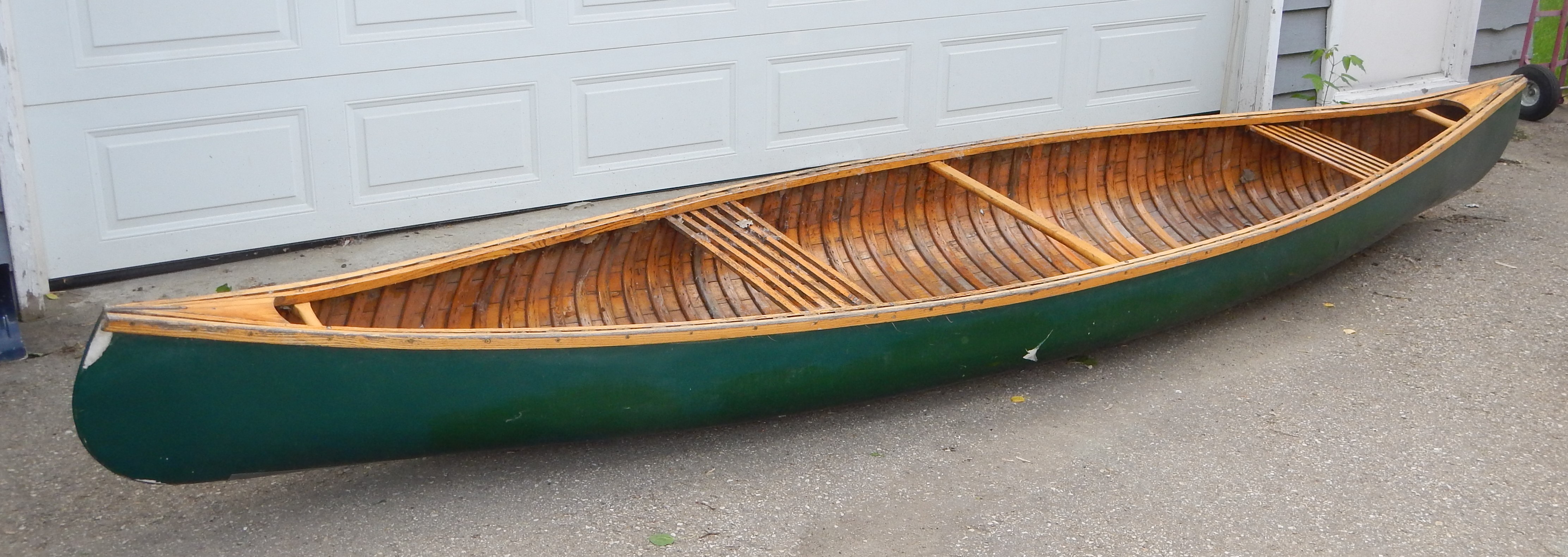
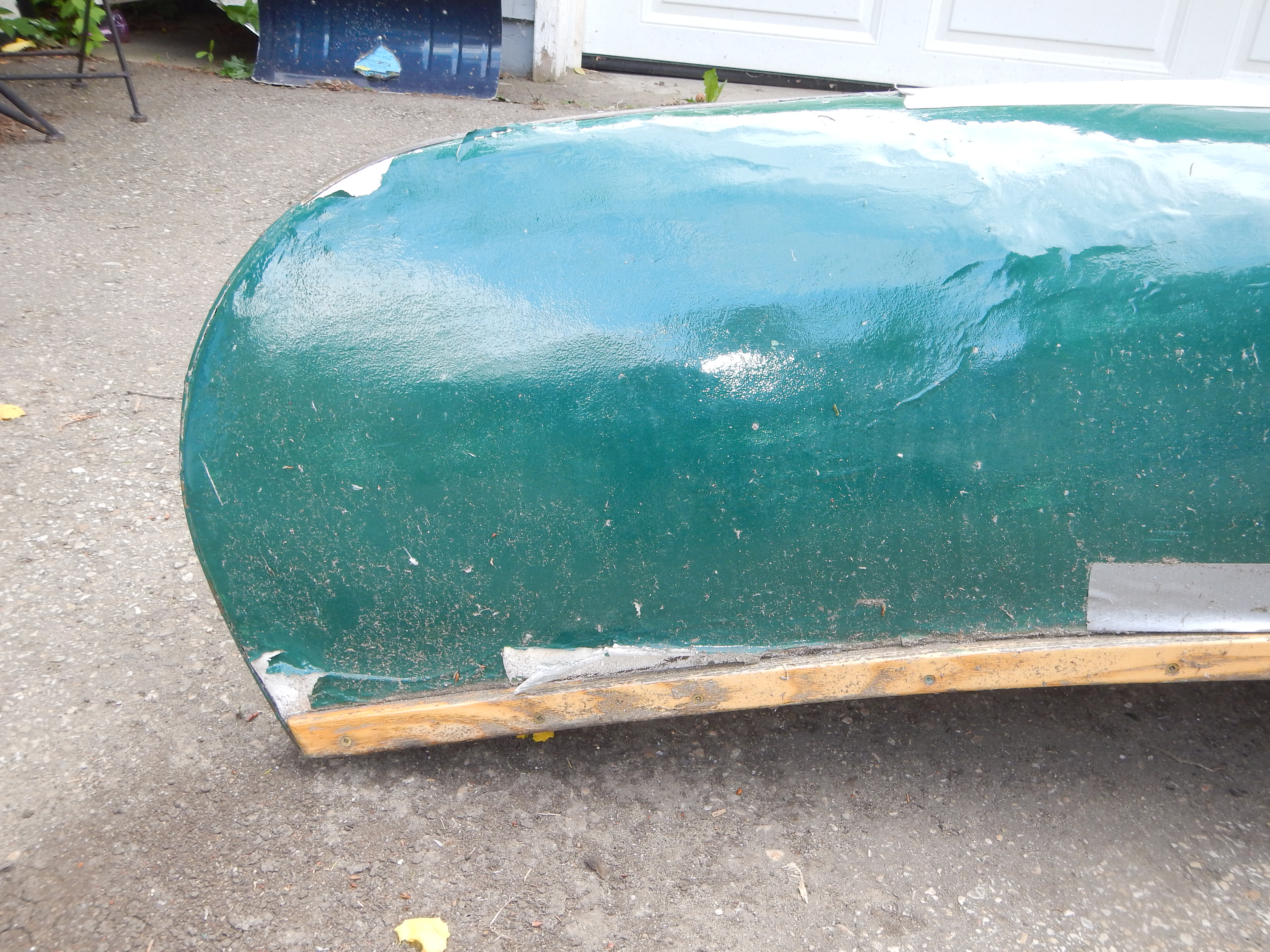
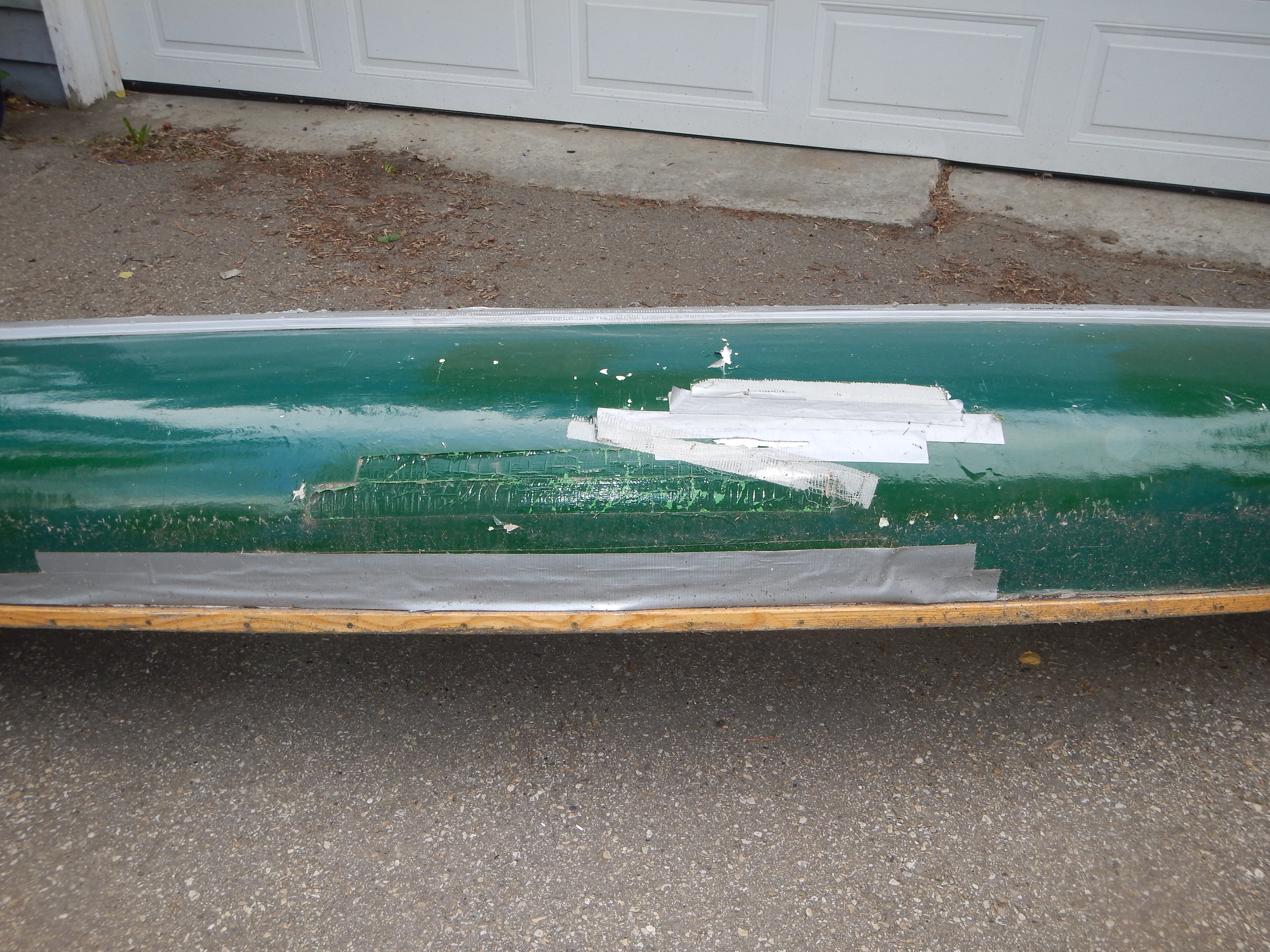
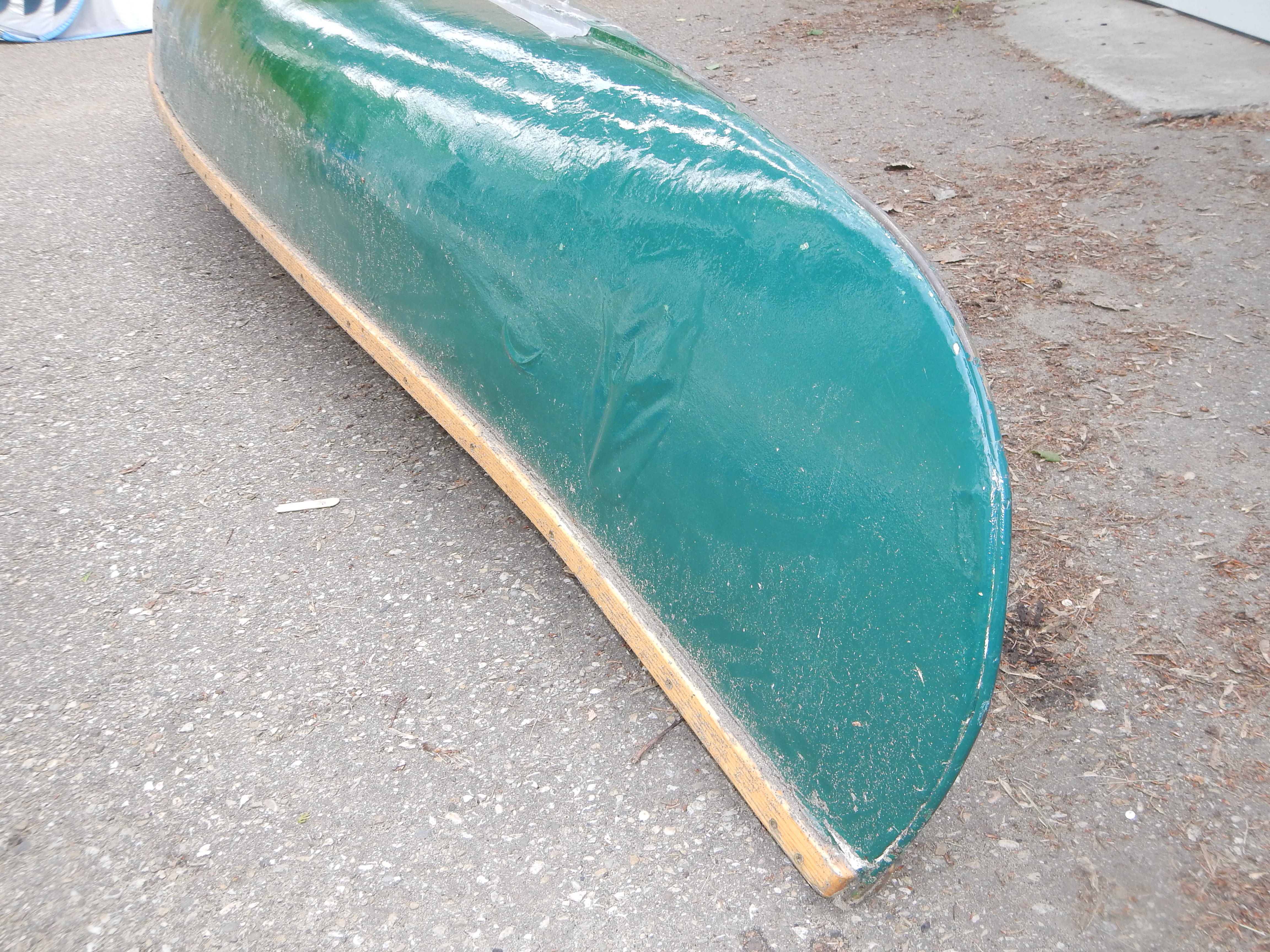
The canoe had been purchased in about 1953s when his father was just a boy, so that would mean that the canoe was approximately 66 years young but the canvas and paint were in disrepair and needed some help. The canoe had been re-canvassed in the early 90’s by a friend of their family, who did a pretty decent job. The outer marine paint has started to separate from the canvas and left pockets where water would pool and then sit, which would further degrade the canvas filler. They probably continued to use the canoe because it would have still been very seaworthy, but when they would store it, they put it under the deck at the family cabin, which was fully enclosed. The flooring of the deck was one solid surface and built using plywood and that was covered with a flexible deck covering. This would normally be very protecting, but when the sides were also fully enclosed so there would be no chance for water to properly evaporate from the boat and so it would just steam away for the summer and then that water would freeze and cause more issues during the winter. The canvas is also in pretty rough shape along the bottom of the canoe where the shoe keel is, and is probably due to dragging the boat instead of carrying it. And as you can see duct tape is a canoeists best friend.
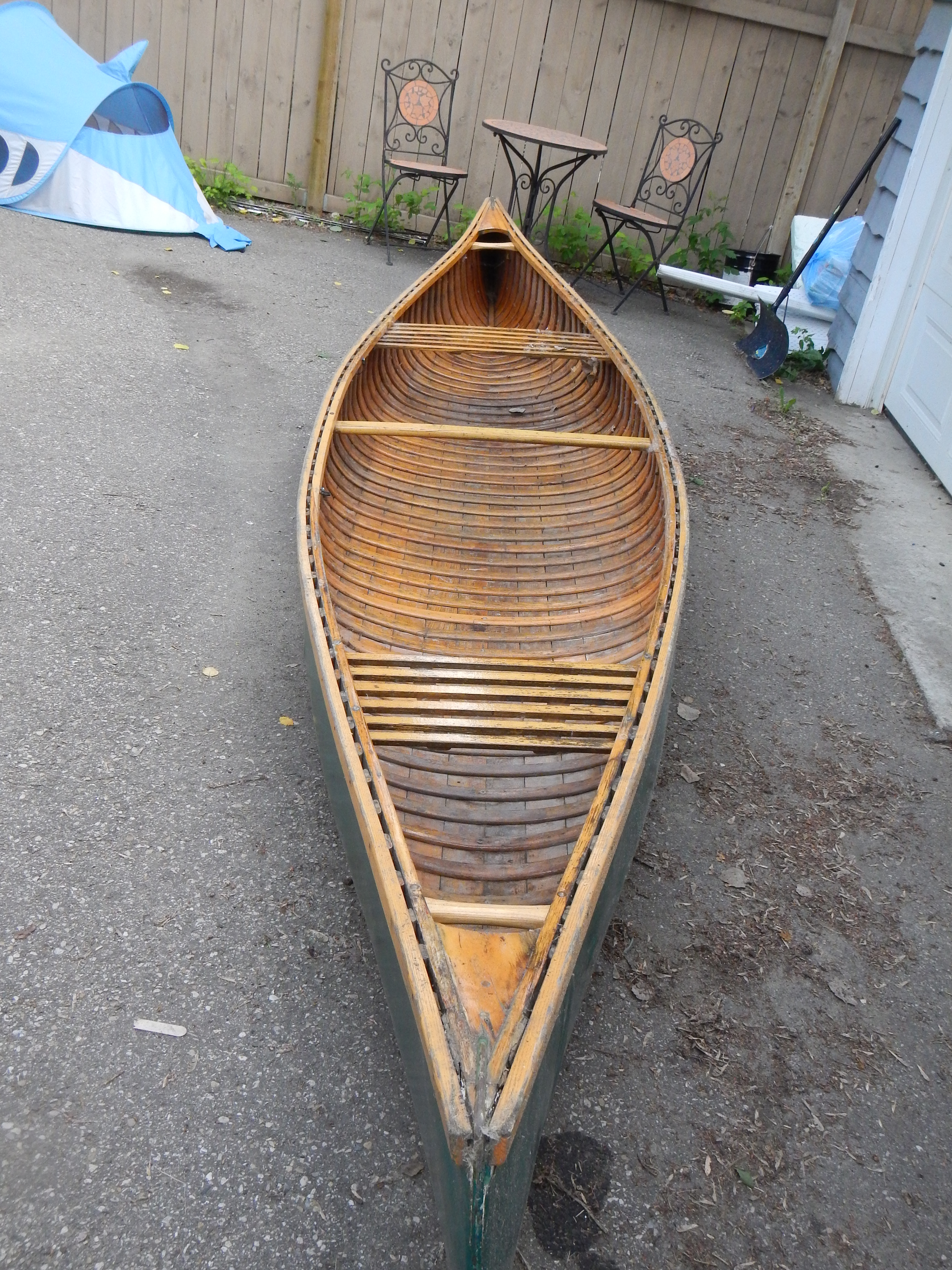
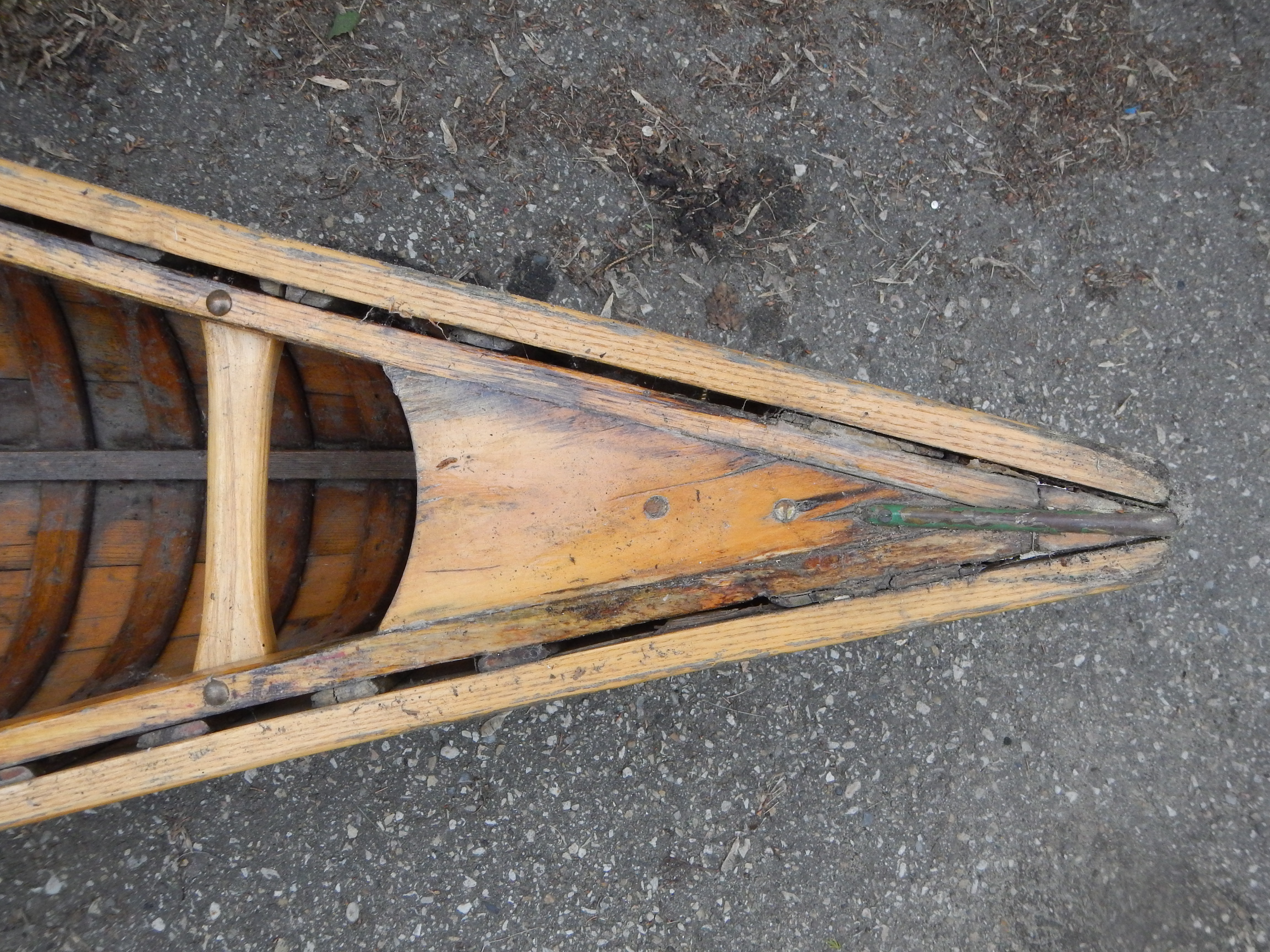
The wood is a different story. The ash gunwales, seats, ribs, thwart and the bow/stern decks all appear to be original and are in pretty good condition. There is a little bit of rot on the tips at the ends of the canoe, which is caused by storing the canoe, tipped over on grass/dirt for long periods of time. This unfortunately is a common blemish that is seen on wood cabin canoes. The only modifications that I can see, is the addition of hand thwarts (which appear to be made of maple).
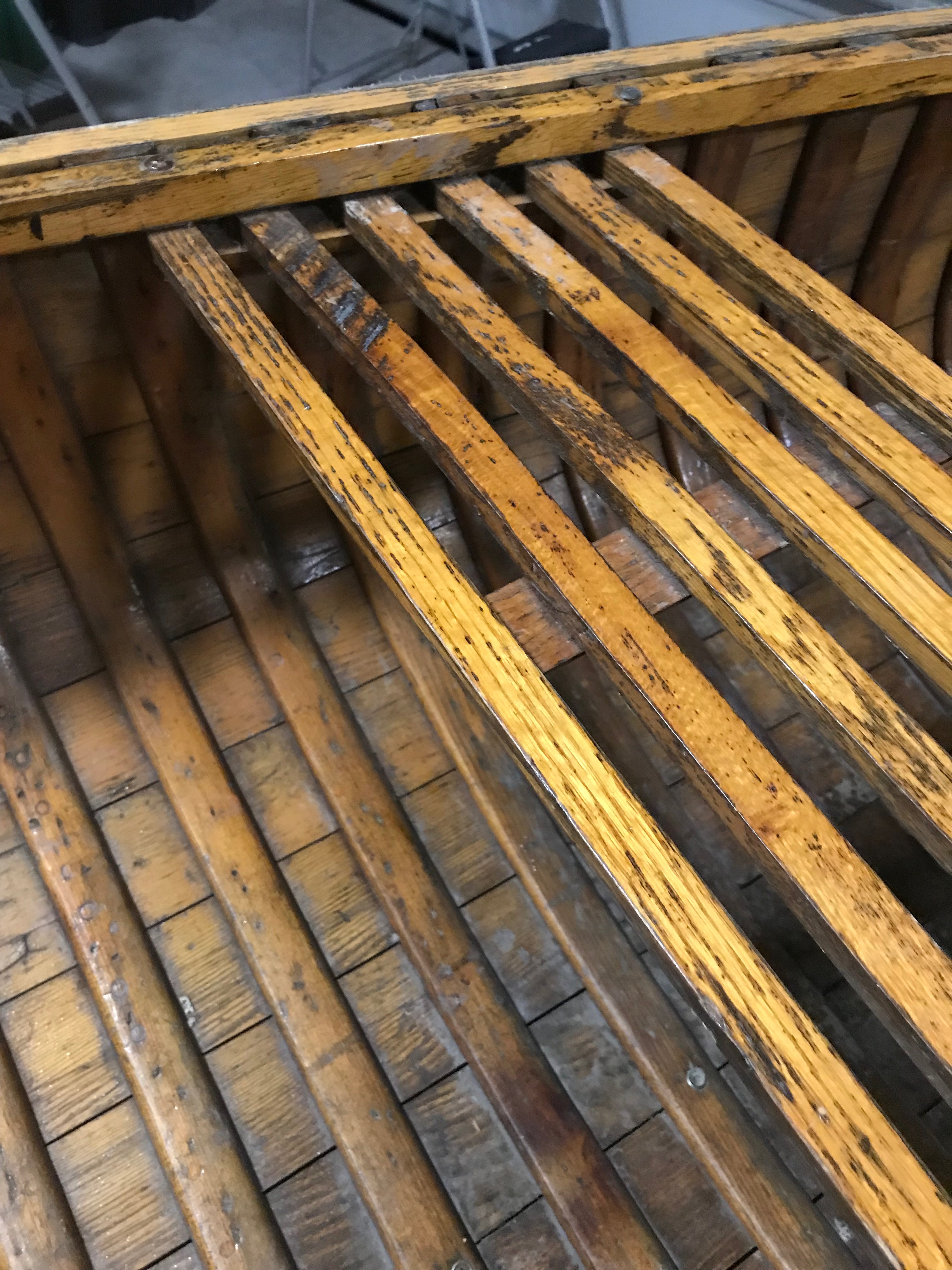
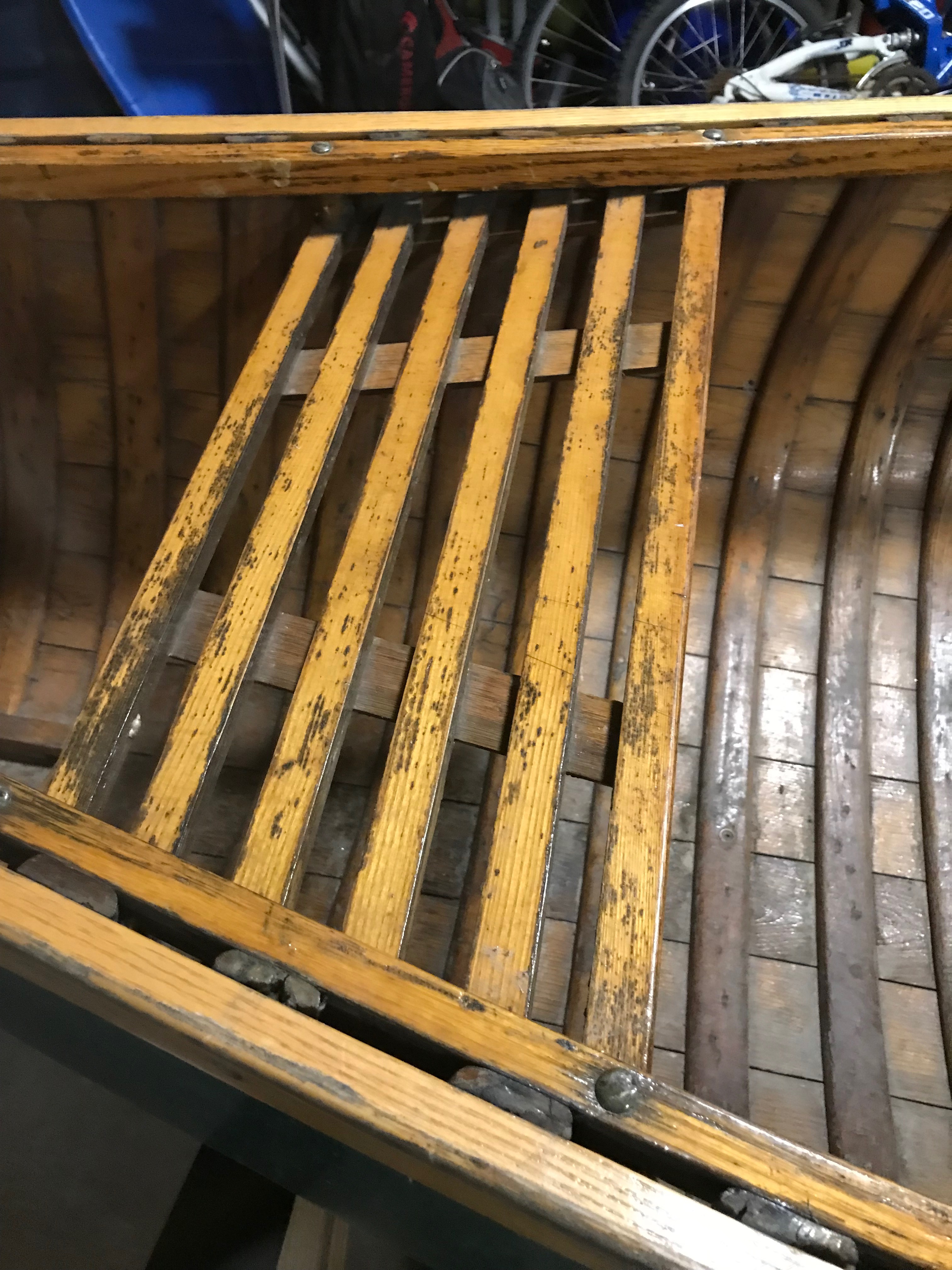
The other modification that was made was to the seats. When the seats were put back in after the re-canvassing the bow seat (bow = front) were installed directly to the bottom of the gunwales, where they normally should have about a one inch hanger spacer placed between the slatted seat and the inner gunwale. This means that the canoeist sits higher in the boat than normal, and because of this higher sitting position, it would be a bit more unstable, due to the higher center of gravity. The seat in the stern of the canoe is not in its original position where the seat hanger spacer is at the back instead of the front. This may not seem like a major issue but when the seat is lower at the front, and you have your legs forward, the seat is very comfortable in both a sitting and kneeling position. The way it is now, front edge of the seat will dig into the backs of your thighs while sitting and would dig into your butt while in the kneeling position.
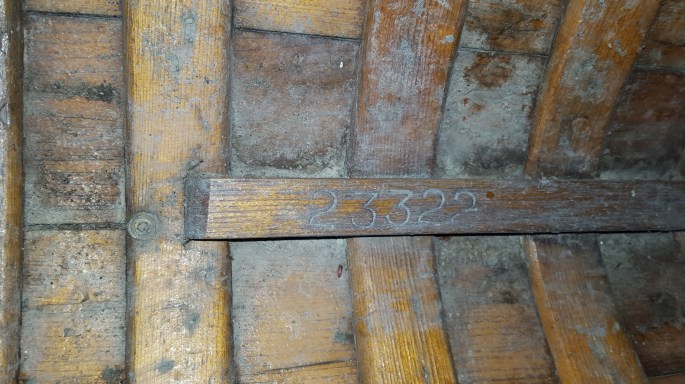
With most canoes it is difficult to determine the age of the boat, unless you have a history. Some canoes have build numbers and others do not. With Old Town Canoes that number means something, and because they still are in business and the have the old build cards, you can contact them and they will tell you exactly the day your canoe was started, the day it was finished, the day it shipped, who built it and the original paint color. With this canoe, there is a build number (#23322) but it will be very difficult to find the information, as there are very few of the original canoe companies left, from back in the day. So to figure out a rough date that this boat was made (and so I can compare to the family story), I will need to look at the features and dimensions of the boat and then compare it to the information that is out in the world on the web and in books..




 The Road Less Paddled